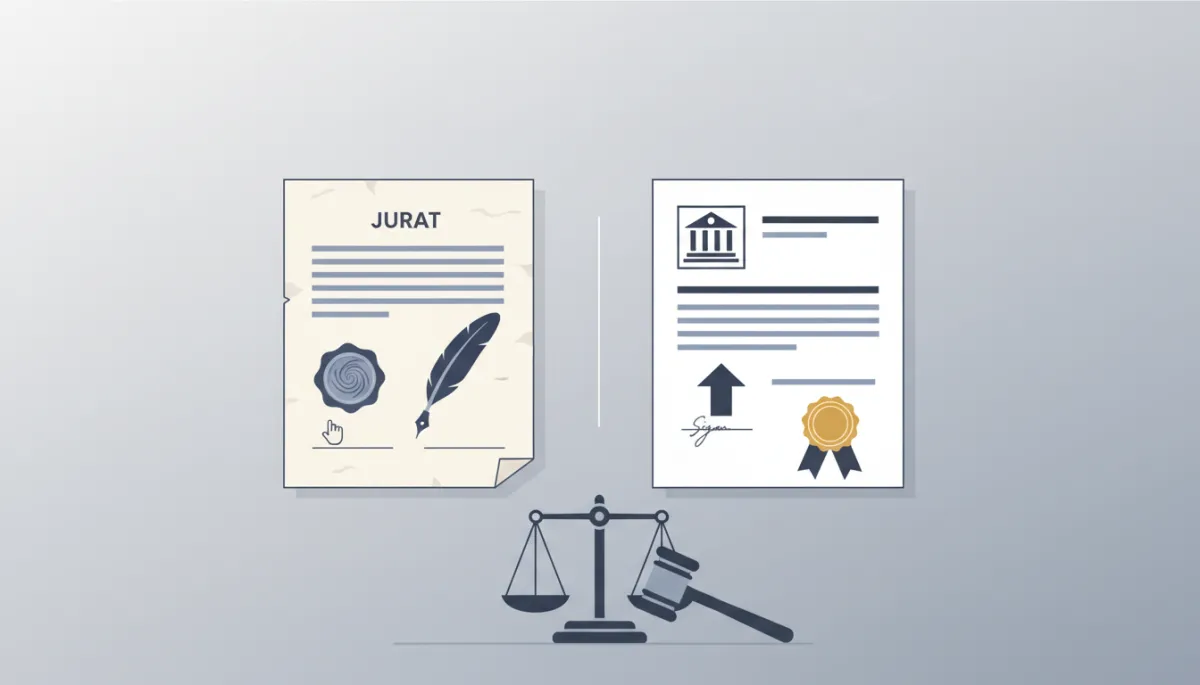
Jurat vs. Acknowledgment: Key Notary Differences
Notary Services | Jurat vs. Acknowledgment
What Is the Difference Between a Jurat and an Acknowledgment?
When you are closing a real estate transaction, preparing estate planning documents, or finalizing financial paperwork, you may see the terms “jurat” and “acknowledgment” on the notary certificate. They are not interchangeable. Understanding the practical difference helps you route documents correctly, avoid delays, and ensure your signers are prepared—without stepping into legal advice.
First Things First: A Quick, Non-Legal Overview
A notary public’s role is to verify identity and complete a specific notarial act, not to give legal advice or decide what type of notarization a document needs. That decision typically comes from:
The document itself (pre-printed notary wording),
The requesting party (title company, lender, attorney, or institution), or
The signer’s written instructions from their legal or financial professional.
With that in mind, here is a clear, business-focused explanation of how a jurat and an acknowledgment differ in everyday use. This information is for general educational purposes and is not legal advice.
What Is an Acknowledgment?
An acknowledgment is a notarial act where the signer:
Personally appears before the notary,
Is properly identified, and
States that they signed the document voluntarily.
The focus is on the signer’s acknowledgment that the signature is theirs and that they chose to sign. The notary is not certifying what is inside the document; instead, the notary is certifying that the person appearing is who they claim to be and that they acknowledged their signature.
📌 Key Takeaway: In an acknowledgment, the notary verifies identity and willingness, not the truth of the document’s contents.
What Is a Jurat?
A jurat is different. With a jurat, the signer:
Personally appears before the notary,
Is properly identified,
Signs the document in the notary’s presence, and
Swears or affirms that the contents are true.
The notary administers an oath or affirmation—something along the lines of, “Do you swear or affirm that the statements in this document are true?” The signer responds verbally, and then signs in front of the notary. The jurat certificate reflects that this oath or affirmation took place.
💡 Pro Tip: With a jurat, timing matters. If the document was already signed, it generally must be signed again in front of the notary so the jurat is valid.
The Core Difference: Acknowledging a Signature vs. Swearing to the Truth
While both acts involve identity verification and personal appearance, the purpose is distinct:
Acknowledgment Jurat Signer acknowledges they signed the document willingly. Signer swears or affirms the document’s contents are true. Signature may occur before meeting the notary. Signature must occur in front of the notary. Common for deeds, mortgages, and many real estate documents. Common for affidavits, sworn statements, and certain legal or medical forms.

Jurats add a sworn oath or affirmation, beyond simply acknowledging a signature.
How This Plays Out for Businesses and Signers
For title companies, lenders, attorneys, healthcare facilities, and financial institutions, the distinction affects workflow and risk management. Using the wrong notarial act can lead to rejected documents, re-signings, funding delays, or compliance concerns. That is why most organizations clearly indicate the required notarial language on their forms.
For individual signers, understanding whether they will be acknowledging a signature or swearing to the truth helps them arrive prepared—with valid ID, clear instructions from their advisor, and an accurate expectation of what the notary will ask them to do.
⚠️ Important: If you are unsure which notarial act your document requires, consult the attorney, title company, lender, or institution that prepared or requested the document. A notary, including Verified Ink Notary, cannot choose the notarial act for you.
How Verified Ink Notary Supports Accurate, Efficient Signings
Verified Ink Notary provides professional mobile notary and certified loan signing services throughout Harris and Galveston Counties. Whether your documents call for a jurat, an acknowledgment, or a mix of both, our focus is on integrity, accuracy, and reliability at every appointment. We confirm identification carefully, follow your written instructions, and complete the appropriate certificates so your documents are ready for recording, funding, or filing.
We regularly serve title companies, real estate professionals, attorneys, banks, credit unions, investment advisors, mortgage lenders, and healthcare facilities—as well as individuals who simply need a trusted mobile notary who will come to their home, office, or hospital room, including evenings and weekends.
Next Step: Be Clear on the Notarial Act, Then Schedule Your Signing
Once you know whether your document requires a jurat or an acknowledgment—and you have that confirmed by the document preparer or your legal professional—Verified Ink Notary is ready to handle the signing with professionalism and respect for your time and confidentiality.
Professional Representation. Reliable Results. If you are coordinating closings, managing sensitive records, or assisting a patient or family member, our mobile notary service is designed to make the process straightforward and convenient.
Schedule Your Signing or Speak With a Notary Today to arrange a mobile notary appointment at the location and time that works best for you.